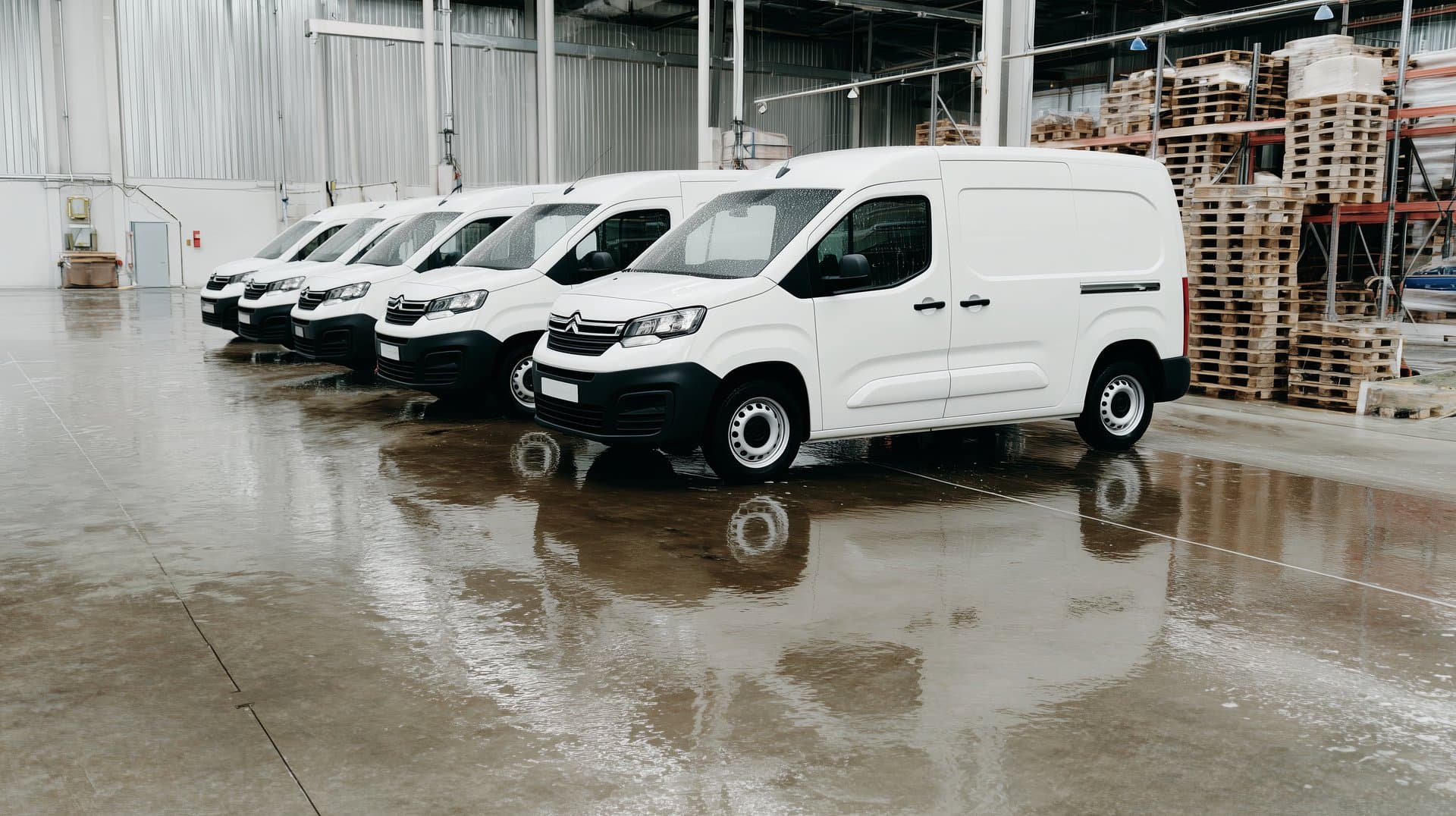
The holiday season is make-or-break for Amazon DSP operators. But here's the hard truth most operators miss: the math you run in October for Q4 success will actively sabotage your cash flow in Q1 if you're not precise about it.
The Capacity Math
During Q4 (October–December), Amazon volume spikes 25–40% above baseline.
A 20-van operator running 80 stops/day handles 1,600 stops daily. At a 30% surge, you need to cover 2,080 stops — requiring approximately 26 vans.
You have three paths: buy 6 vans permanently, rent 6 for Q4, or subcontract overflow. The choice you make dictates your financial health for the next 12 months.
The Q1 Trap
The moment the holidays end, volume drops back to baseline — or in many markets, can fall below baseline in January. Now you have 26 vans and only need 18–19. Six to seven sit idle.
Idle van cost breakdown:
- Finance payment: $938–$1,050/mo
- Insurance: fixed monthly premium (varies by fleet)
- Storage/maintenance: $150/mo
- Total per idle van: $1,268–$1,380/mo
At 6 idle vans: $7,600–$8,280/mo in dead overhead — every single month through the Q1 trough. That's nearly $30,000 gone before spring.
The Rental Math
Renting 6 vans for Q4 surge: $1,450/mo x 6 x 3 months = $26,100 total.
Buying 6 vans and running them idle in Q1: $938/mo x 6 = $5,628/mo in dead overhead — indefinitely, every trough year over year.
The Decision Framework
Surge is predictable and temporary → RENT. Seasonal demand spikes are what the rental market exists for. Align your costs with your revenue.
Territory growing 15%+ YoY organically → BUY. If your baseline is permanently shifting upward, the surge capacity becomes your new floor.
Don't know your trajectory → Model it before committing. Guessing wrong costs $30K+ in dead overhead before you can react.
The Timing Trap
Don't wait until November to source rental vans. Rental rates typically spike 20–30% as peak approaches. Negotiate your agreements in September — lock in rates before the market tightens.
The difference between a thriving DSP and a struggling one often comes down to fleet utilization efficiency across the full calendar year, not just Q4 performance.
Frequently Asked Questions
Should DSP operators buy extra vans for Amazon Q4 volume? Only if the incremental revenue over the surge period exceeds the holding cost of idle vehicles in Q1–Q2. A van that costs $938/month to finance generates approximately $1,850/month in Q4 revenue at standard stop rates — but generates closer to $950/month in Q1 at reduced volume, barely covering carrying costs.
What does it cost to park an idle DSP van per month? A financed van with insurance, basic maintenance, and the finance payment runs $1,200–$1,500/month whether it moves or not. A leased van runs $1,050–$1,200/month idle. Neither number disappears when routes dry up.
How should DSPs handle seasonal volume swings? The operators who manage seasonality best use short-term rentals for incremental Q4 volume rather than expanding owned/financed fleet. This keeps the core fleet utilization rate high and avoids the Q1 idle cost problem.