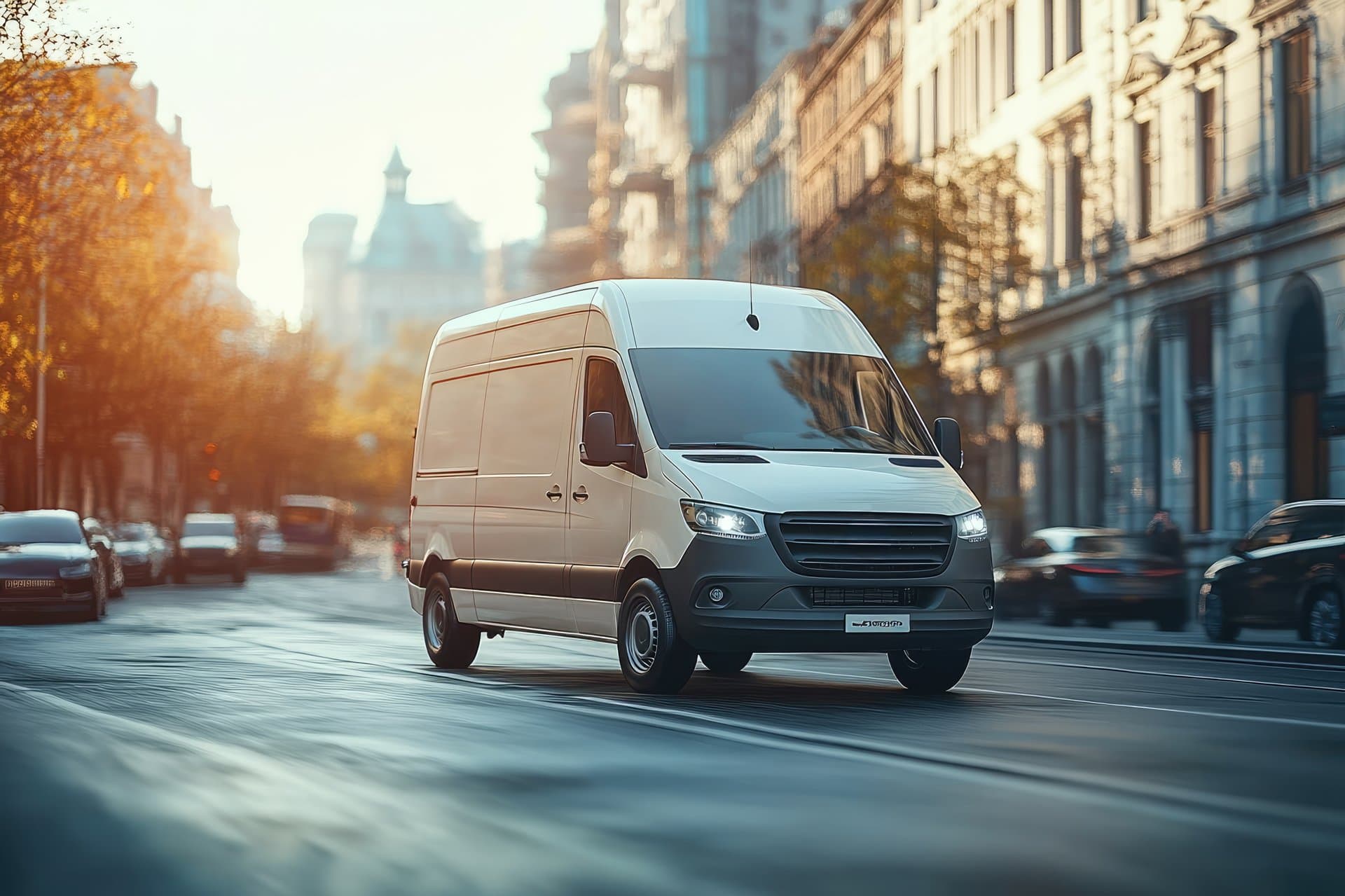
Amazon announced it will invest more than $4 billion to triple the size of its rural delivery network by the end of 2026, expanding to more than 200 new delivery stations and adding over 100,000 jobs across DSP and Amazon Flex programs, per Amazon's official announcement and coverage by Retail TouchPoints and Chain Store Age. When complete, the network will reach customers in 13,000 zip codes spanning 1.2 million square miles — an area Amazon compares in size to Alaska, California, and Texas combined. For DSP operators looking at new station opportunities, this investment represents real volume and real growth. It also represents a cost structure that breaks the assumptions most operators built their businesses around.
Rural routes are not urban routes with a longer drive. They are a different economic category, and the operators who sign rural contracts without modeling what they're actually signing are going to discover the gap between the headline and the P&L.
The Density Problem That Doesn't Show Up in the Contract
The core economics of last-mile delivery run on a single ratio: stops per mile. In a dense urban area, a driver can execute 30 or more stops within a two-mile radius. The fuel cost, the driver-hours, the vehicle wear — all of it gets spread across a high stop count. Cost per stop stays manageable because the denominator stays high.
In rural areas, that ratio inverts. Routes cover more miles between stops, not because the stops are fewer in absolute terms, but because the delivery addresses are spread across a geographic area that doesn't compress the way urban territories do. Industry analysis from fleet logistics firms including SmartRoutes and Sifted has estimated that the effective cost gap between rural and dense urban package delivery can reach four to five times on a per-package basis — driven almost entirely by the miles-per-stop ratio, not by any single line item in the budget.
The American Transportation Research Institute's 2025 Operational Costs of Trucking report documented that non-fuel operating costs for commercial vehicles hit a record $1.779 per mile in 2024 — the highest ATRI has recorded in its benchmarking series. Those costs include driver wages, benefits, maintenance, insurance, and vehicle payments. Every additional mile between stops is running that meter. An urban operator whose drivers execute dense stop sequences over short distances sees that cost structure per stop; a rural operator whose drivers cover twice the miles for the same stop count sees it doubled.
What Amazon's Rural Expansion Is Actually Building
Amazon's $4 billion rural commitment is not a DSP growth subsidy — it is Amazon building the infrastructure it needs to fulfill its promise to Prime members in markets it has underserved. The company intends to cut average delivery times in half in rural areas and reach a billion additional packages per year in these zip codes, per FreightWaves' coverage of the expansion timeline. For each new delivery station, Amazon estimates an average of 170 jobs created at the facility itself, plus additional driving opportunities through DSP and Flex programs.
Amazon also began rapidly expanding fast-delivery service to rural communities starting in 2025, with FreightWaves reporting the expansion reached 4,000 rural communities in that year alone. That pace of station buildout creates genuine DSP openings. The program has already supported 2,600 U.S. DSP owners generating nearly $50 billion in business revenue with 210,000 driving jobs, per Amazon's own program data — and rural expansion will add to that footprint.
The question is not whether the volume will materialize. Amazon's investment record on this program suggests it will. The question is whether a DSP operator's cost structure, built around the economics of urban or suburban density, will hold up when the miles-per-stop ratio shifts.
The Numbers That Matter Before You Sign
Taking a rural station opportunity requires modeling three variables that most operators don't track at the granularity they need for this decision.
The first is actual route miles per stop, not just stop count. Urban assumptions embedded in an operator's cost-per-stop baseline will understate the true cost if that baseline was built on dense suburban routes. The second is driver productive-time ratio — the share of each driver's paid hours spent delivering versus driving between stops. Rural routes push that ratio toward more driving and less delivering, which raises effective labor cost per package without changing the driver's hourly rate — at the national median driver wage of $21.57/hour, loaded 1.27× across an 8.5-hour route day, that's roughly $233 in driver cost shifting from delivering into driving before the additional rural miles are even factored in. The third is vehicle cost per package delivered, not per mile driven. ATRI's non-fuel cost benchmark at $1.779 per mile means a vehicle covering an extra 50 miles per shift to service a rural route is adding roughly $89 in non-fuel operating cost per shift — cost that only makes sense if the additional stops that shift generates can absorb it.
Operators who run their fully loaded cost-per-stop calculation against an actual rural route sample — not a projected stop count from a station pitch — have the data to make this decision clearly. Those who evaluate the opportunity based on stop count alone and apply their urban cost model to a rural geography are going to find a margin problem that wasn't visible in the contract.
The "Know Your Numbers" Requirement Just Got Harder
Amazon's rural expansion creates real opportunity for operators who want to grow. It also creates a selection effect: operators who understand their cost structure well enough to evaluate a geographically novel route type will find rural contracts workable and potentially attractive. Operators who don't will sign agreements whose economics they are not equipped to evaluate — and they will not find out they got it wrong until the quarterly numbers don't close.
The DSP market rewards operators who can run the math their competitors are skipping. Rural expansion is the next version of that test.
Sources: Amazon program announcement (aboutamazon.com); Retail TouchPoints, Amazon Rural Delivery Investment coverage; Chain Store Age, Amazon Rural Station Expansion reporting; FreightWaves, "Amazon fast-delivery expansion to reach 4,000 rural communities in 2025"; ATRI, An Analysis of the Operational Costs of Trucking: 2025 Update; SmartRoutes last-mile delivery industry analysis; Amazon DSP program data (logistics.amazon.com)