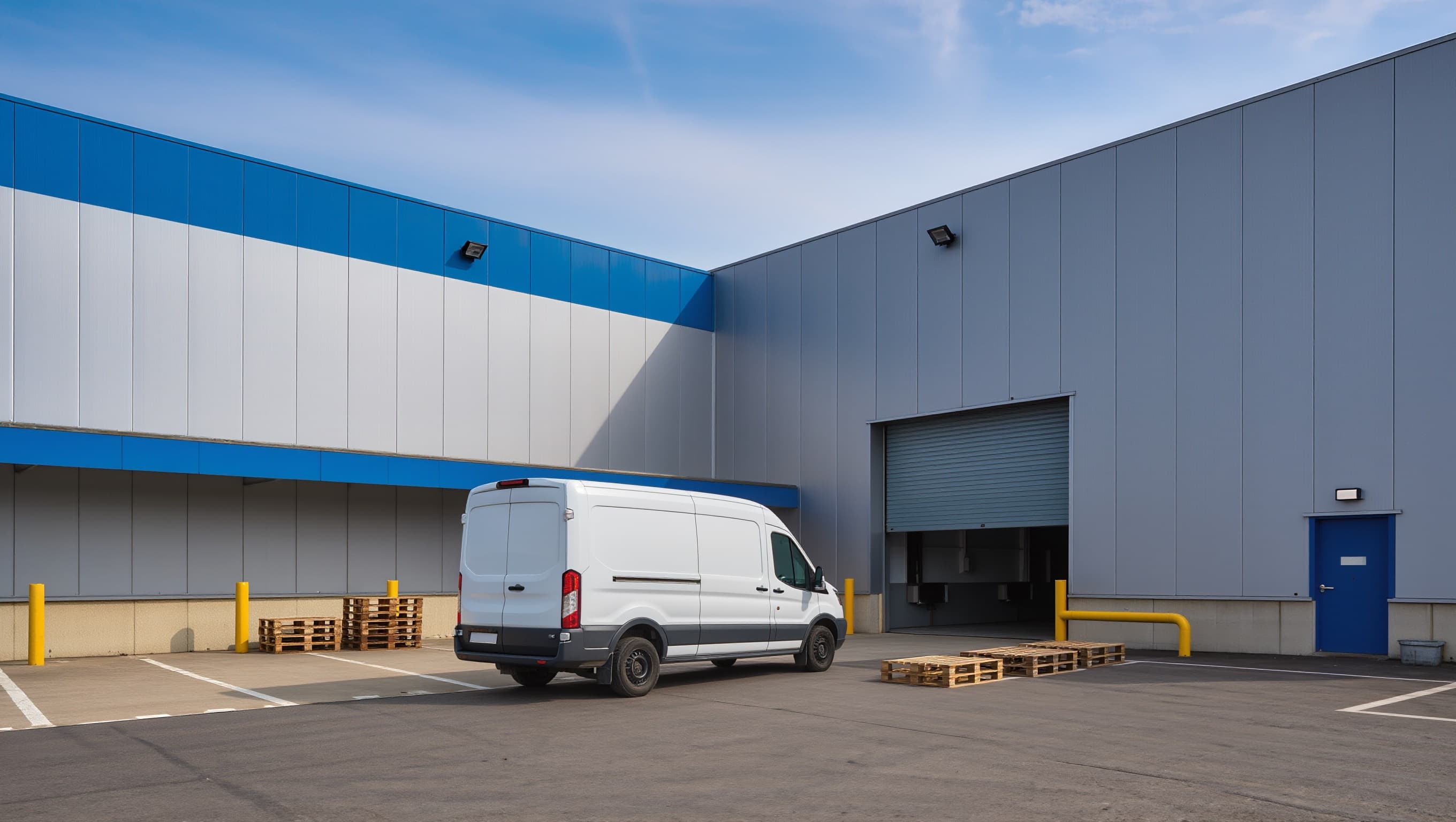
A same-day delivery station is not a fleet forecast by itself.
It is a prompt to ask better questions.
That distinction matters for a public-data-first fleet audit. Local reporting can show that a same-day or delivery-station node exists. It can show the market, the facility type, and sometimes a basic footprint or service-area description. But it does not automatically show which contractor runs which routes, how many vans are needed, how much rental capacity will tighten, or whether a specific operator should buy, rent, repair, or replace vehicles.
Recent facility-watch signals make the point.
In the Pittsburgh corridor, local reporting identified Amazon's SPA5 facility in Findlay Township as a same-day delivery station. Separate official-local context supported a meaningful Amazon facility footprint in that township. In North Carolina, WCTI reported five Amazon delivery-station openings across Tarboro, Jacksonville, Southern Pines, Mount Airy, and Hayesville, with a separate Jacksonville article describing a delivery station that launched in September 2025.
Those are useful signals.
They are not enough to make a customer recommendation.
For Pexara's Outside-In Fleet Decision Audit, the value is in the middle step: converting a public facility signal into a decision screen without pretending it proves the answer.
A same-day node can change what an operator should watch. It may raise questions about local route density, delivery-speed expectations, rental-van availability, repair capacity, spare coverage, labor availability, and whether a market is becoming more sensitive to downtime. A smaller-market delivery station can matter for a different reason: it can make last-mile capacity more local and less forgiving when vehicles are offline.
But every one of those is a question until it is supported.
The audit should keep the lanes separate:
- Source-backed facility facts. What public reporting or official-local records actually say about the site.
- Market-context interpretation. Why that site could matter for fleet planning.
- Unsupported downstream claims. Route counts, contractor assignments, package volume, van counts, rental demand, and maintenance demand that have not been verified.
- Customer-data-required questions. The operator's actual routes, spare plan, repair history, rental quotes, replacement timing, and service obligations.
That structure prevents a common mistake: treating a facility article as if it were a fleet-demand model.
For an operator, the better question is not, "Did a new station open, so should I add vans?" The better question is:
- Does this signal change the market pressure around my routes?
- Which parts of my fleet plan are fragile if same-day expectations rise?
- Is the risk vehicle count, downtime, rental availability, repair turnaround, or route fit?
- What would prove that this public signal affects my actual economics?
The answer might still be to rent short term. It might be to repair and protect remaining-use value. It might be to delay a purchase until better comps exist. It might simply be to watch the market while gathering operator-specific data.
A public-data-first audit should not overclaim before the operator provides that data. Its job is to narrow the decision so the next evidence request is worth answering.
That is the difference between a facility watchlist and a decision audit.
The watchlist says a station exists.
The audit asks what that station could change, what it cannot prove yet, and what evidence would make the fleet decision safer.