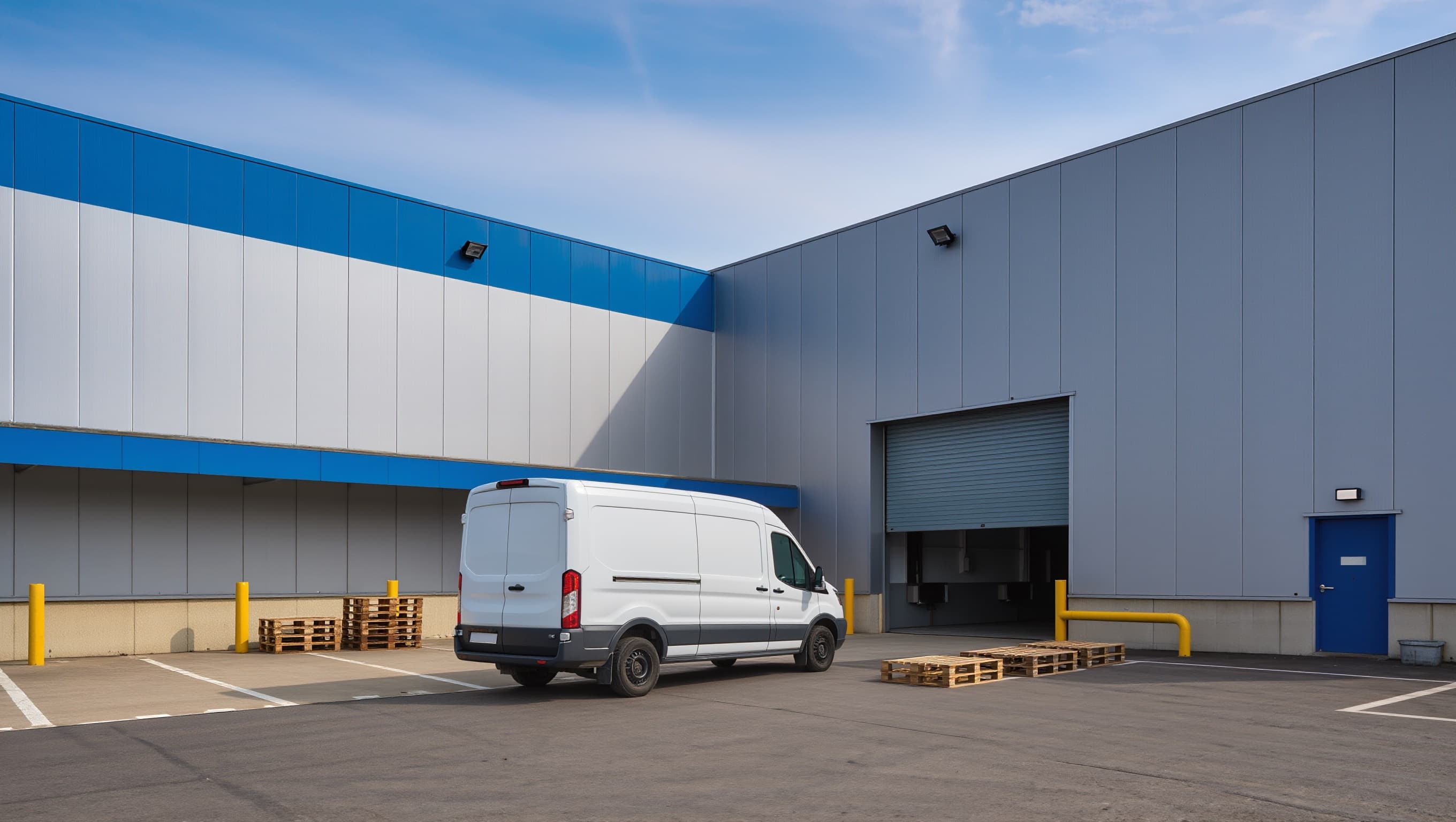
The wrong lesson from cargo-bike delivery is that vans are going away.
The useful lesson is more specific: in some dense urban markets, the fleet question is no longer just how many vans an operator needs. It is which delivery mode fits the constraint.
That distinction matters for an Outside-In Fleet Decision Audit.
A van is still essential for many last-mile routes. It carries more, covers wider geographies, handles larger parcels, and supports work that a bike or pushcart cannot touch. But in parts of a city where curb space is scarce, parking is painful, congestion is constant, and delivery density is high, the next-best answer may not be another van.
It may be a different operating pattern.
Recent New York reporting on Amazon cargo bikes, Amazon's own description of e-bike and on-foot delivery in New York City, and NYC DOT's cargo-bike rules all point in the same direction: dense-city delivery is becoming a mixed-mode problem. E-bikes, cargo bikes, pushcarts, Hub Delivery partners, DSP associates, electric vans, loading zones, corrals, and microhub-style staging can all sit inside the same final-mile system.
For operators, that does not create a simple buy-this / don't-buy-that answer.
It creates a better audit question.
Before renting or buying another van for a dense urban route, the operator should ask:
- Is the constraint vehicle count, or is it curb access?
- Is the route geography compact enough for a non-van mode to matter?
- Is there a hub, corral, or staging point close enough to the delivery density?
- Are parcels, weather, rider safety, training, charging, storage, maintenance, and insurance/compliance supportable?
- Which stops still need a van, and which stops are better served by a different mode?
Those are not dashboard questions. They are decision questions.
They also change how a repair, rental, or purchase screen should be framed. If a van is down, the answer may still be a rental. If peak is coming, the answer may still be more van capacity. If the route is suburban or rural, the cargo-bike signal may be mostly background context.
But in a dense-city pocket, the audit should not assume the only substitute for a van is another van.
The right first-pass screen separates four things:
- Route fit. Does the geography, density, parcel mix, and customer promise support a non-van mode?
- Operating support. Does the operator have loading, charging, storage, safety, training, maintenance, and supervision capacity?
- Remaining van work. Which deliveries still require vans, and how does that affect rental or replacement need?
- Evidence gaps. Which facts are source-backed, which are assumption-backed, and which require operator data before the decision can be trusted?
That last part is where the audit becomes useful.
A public signal can show that a mode is real. A city rule can show that the curb framework exists. A platform example can show why the model is being tested. But none of that proves a specific operator should replace vans, cut rentals, change routes, or alter insurance assumptions.
Pexara's posture is to keep those labels visible.
For a dense-city fleet decision, the first article of faith should not be "add another van." It should be: identify the constraint, test the route mode, and show what evidence would change the answer.
If the route still needs a van, the audit should say so. If the decision depends on private route density or customer promise data, the audit should say that too. If the public signal is only market context, it should remain market context.
That is the value of public-data-first analysis. It does not pretend to know the operator's exact economics before the operator provides data. It narrows the question so the next data request is worth answering.
Cargo bikes do not eliminate the fleet decision.
They make the fleet decision more precise.